A UN resolution drafted by the United States gives three former occupying powers temporary influence over Gaza. Turkey can also gain a foothold despite Israel – which has restricted Turkey’s influence in southern Syria – having opposed Turkish involvement.
Iran’s Shia Muslim network having collapsed, a neo-Ottoman alliance consisting of Turkey, Qatar, and the Muslim Brotherhood is attempting to seize the initiative in the Middle East.
On Monday, 17 November, the UN Security Council voted in favour of a US resolution welcoming the establishment of a peace authority in Gaza tasked with setting up a temporary international peacekeeping force in the area. A Palestinian police force is to be trained to join the multinational force.
The proposal is a revised version of the 20-point plan that US President Donald Trump launched at the end of September, in which the first phase involved a ceasefire in Gaza, the release of the remaining hostages, the release of Palestinian prisoners, a partial withdrawal of the Israel Defense Forces (IDF), and an increase in humanitarian aid to the territory.
The second stage requires the dismantling of Hamas’s armed wing, further IDF withdrawal to gradually hand over security responsibility to the peacekeeping force.
An interim government will then be established in Gaza consisting of Palestinian and international experts under the supervision of a non-political Palestinian administration overseen by a Trump-led peace committee that includes former British Prime Minister Tony Blair.
This body will eventually cede control of Gaza to a reformed Palestinian Authority (PA), at which point “the conditions may finally be in place for a credible path to Palestinian self-determination and an independent state.”
The United States wants to establish the peacekeeping force by January 2026 at the latest, with a total of approximately 20,000 troops from countries including Azerbaijan, Egypt, Indonesia, Qatar, and Turkey, which wanted a Security Council mandate to contribute troops.
Horse-trading ahead of the vote
On 5 November, the US informed all members of the UN Security Council, as well as Egypt, Qatar, Saudi Arabia, Turkey, and the United Arab Emirates (UAE), of its original draft. After a round of negotiations, a revised draft was released on 10 November. Algeria, China, Russia, and several other members submitted further comments, and on 12 November the US presented a second revised draft, prompting China and Russia to present an alternative draft as leverage ahead of the vote on 17 November. Several Security Council members demanded a stronger role for the Palestinian Authority and clearer wording on a two-state solution.
The US revised draft therefore included a reference to a two-state solution and also removed wording that organisations which had abused their aid role should have no role – a reference to UNRWA, which has been accused of collaborating with the terrorist group Hamas.
Ahead of the UN vote, Hamas rejected the American proposal for a peacekeeping force in Gaza, saying that demilitarising the terror group violates “the right to resistance” and Palestinian sovereignty.
The terror group criticised what it called “an attempt to subject the Gaza Strip to international authority” and rejected any foreign military presence inside Gaza. According to the Jerusalem Post, Hamas has reportedly begun stockpiling advanced weapons abroad in the hope of smuggling them into Gaza in the future.
Opening the way for a Palestinian state
To gather support, the US organised a joint statement a few days before the vote stating that Trump’s plan offered a path to a future Palestinian state – going further than the 20-point plan, which only said it “could” lead to such an outcome.
The sharpening of the wording, which was probably needed to bring more countries on board, led Prime Minister Benjamin Netanyahu to stress that Israel’s opposition to a Palestinian state “has not changed one bit.”
Turkey can now become a key player in the future Gaza, with Trump’s backing. Turkish President Recep Tayyip Erdogan defends the terror group Hamas, has compared Prime Minister Benjamin Netanyahu to Hitler, and has accused Israel of genocide while denying the 1915 genocide in the Ottoman Empire.
Erdogan threatened to cancel his attendance in Sharm el-Sheikh when the peace agreement was signed and to return home if Netanyahu appeared. Erdogan, who has expressed open support for the Muslim Brotherhood – of which the terror group Hamas is a Palestinian branch – can thus give Turkey a foothold in Gaza despite Israel having opposed Turkish involvement. Israel has also tried to limit Turkey’s influence in southern Syria.
“Erdogan has dreamed of a role in Gaza since 7 October,” Dr Gallia Lindenstrauss told Ynet news in mid-October.
Lindenstrauss, a senior researcher at Israel’s Institute for National Security Studies (INSS), was referring to a mid-October statement from Turkey’s Ministry of Defence: “Our forces, which are experienced in creating and maintaining peace, are ready for any mission assigned to them.”
On Hamas’s side
According to Lindenstrauss, the more Turkey and Qatar become involved, the harder it becomes to marginalise Hamas.
“Turkey stands on Hamas’s side. The idea of Turkish troops in Gaza is deeply worrying – what happens if Israel accidentally attacks them? Tensions are already high enough,” she said.
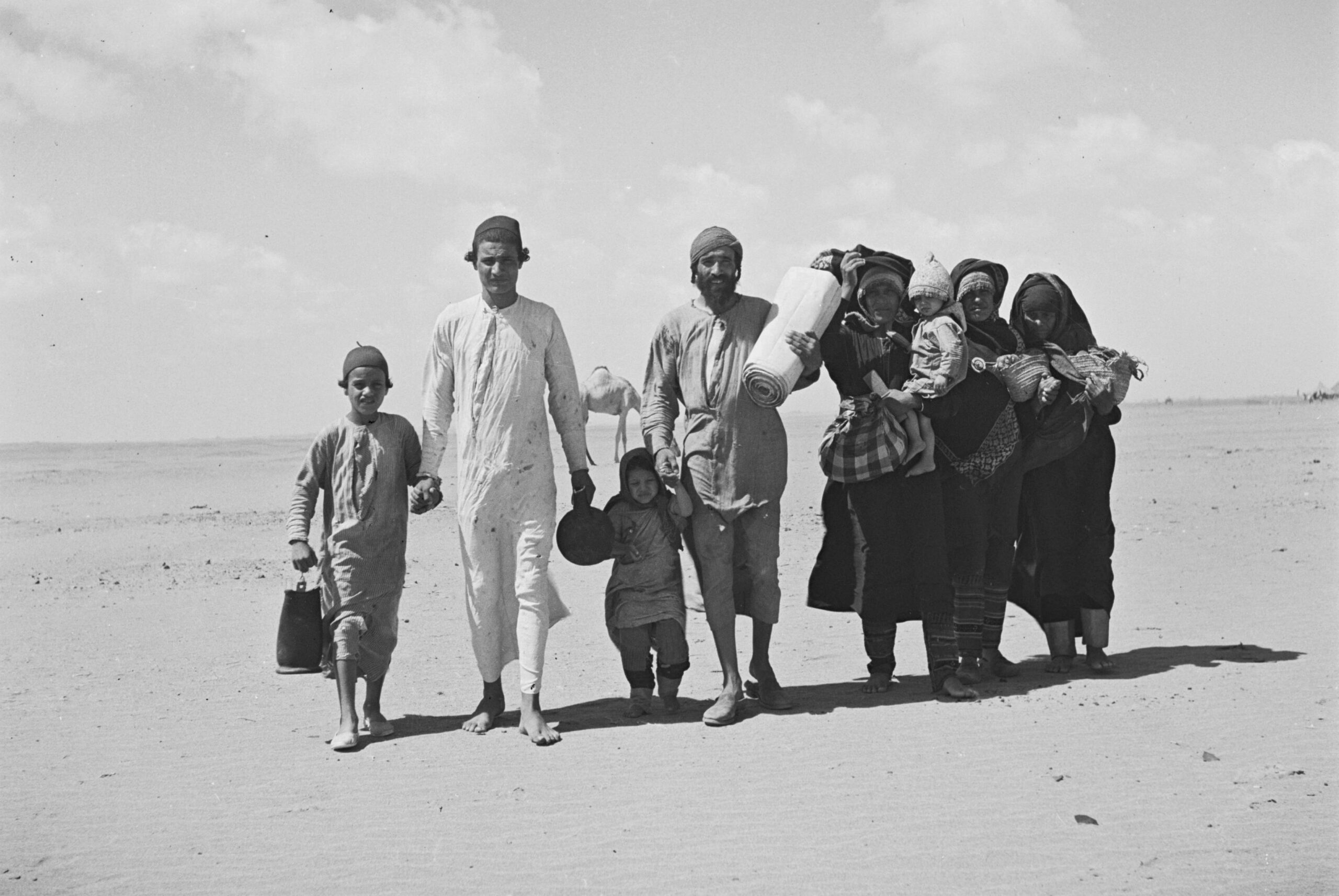
The fact that Egypt, Turkey, and Britain – via Tony Blair – are now to be involved in governing Gaza means that three former occupying powers are temporarily regaining their historical influence over the Gaza Strip.
Israel’s Minister for Diaspora Affairs and Combating Antisemitism, Amichai Chikli, condemned Turkish President Recep Tayyip Erdogan’s participation in the peace agreement and highlighted a prayer on 30 March 2025 in which Erdogan prayed that “Zionist Israel” be “destroyed and laid waste.” He accused the Turkish leader of constantly trying to undermine the Jewish people’s historical ties to Jerusalem.
Chikli described Erdogan as “a sworn enemy of Israel and the West, a jihadist in a suit” and pointed to previous statements by the Turkish leader claiming a special Turkish claim to Jerusalem because of the Ottoman Empire’s occupation of the area. On 1 October 2020, Erdogan told the Turkish parliament: “Jerusalem is our city…”