From the Pool of Siloam to the Temple
The 2000-year-old road between the Pool of Siloam and the Temple at Jerusalem is under excavation. Jewish pilgrims who traveled to Jerusalem three times a year (Passover, Pentecost, and the Feast of Tabernacles) used the ancient road, the construction of which was completed by Pontius Pilate.
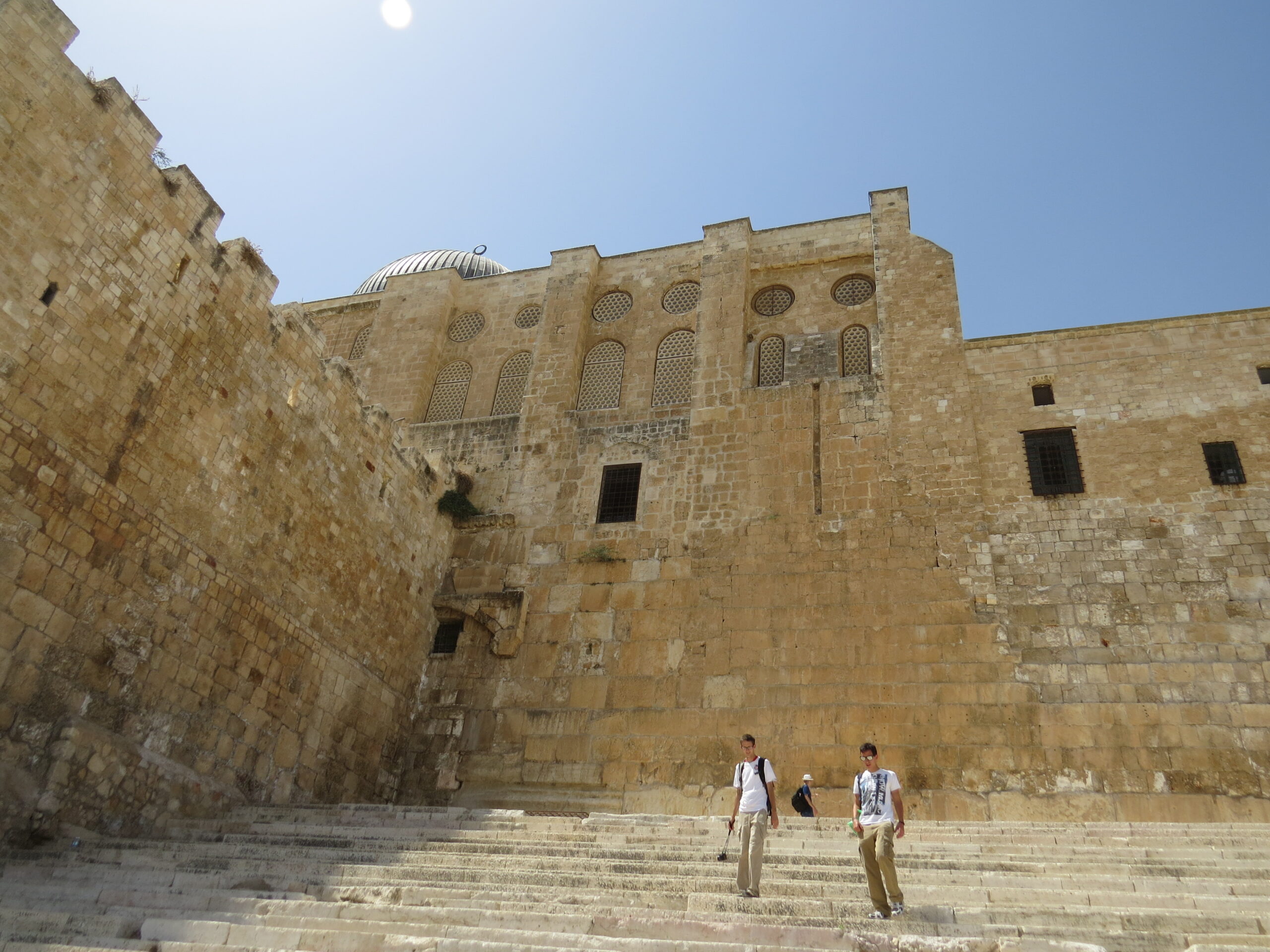
These steps were used by the Jews who went from the Pool of Siloam to the Temple Mount 2,000 years ago.
Photo: Assaf Avraham
It was the Roman governor Pontius Pilate who ordered the construction of the pilgrimage route that led up to the Jewish temple more than 2,000 years ago.
National Geographic describes how historians previously believed that King Herod the Great was responsible for most of the major construction projects in ancient Jerusalem. However, a recent analysis of more than 100 coins found along the route suggests that it was completed during Pontius Pilate’s ten-year rule as governor which began in AD 26 or 27. Coins discovered under the paving-stones in recent years date to around the year 31. The road took ten years for the Romans to build and over 10,000 tons of limestone were used in the construction. The Jerusalem Road was used by Jewish pilgrims who traveled to their capital city three times a year – at Passover (Pesach), Pentecost (Shavuot), and the Feast of Tabernacles (Sukkot). This stage of their pilgrimage began with a ritual bath at the Pool of Siloam before going up to the temple to sacrifice.
Two million pilgrims
The historian Josephus says that 2000 years ago there could have been more than two million pilgrims attending these festivals – ‘that’s a lot of people needing a bath’, says Zeev Orenstein, Director of International Relations at the City of David Foundation to CBN. The Pool of Siloam is also the place where Jesus healed the blind man as recounted in the Gospel of John. The site was hidden under a road until fifteen years ago when a sewer leak led to excavations. The stones are the same ones Jesus walked on, on his way up to the temple. The excavation of the pilgrimage route means that for the first time in 2000 years visitors will be able to walk all the way from the the Pool of Siloam up to the Western Wall. In Jerusalem, archeological layers are built on top of each other and modern neighborhoods are built on top of the archeological layers. Even though the ancient road was out in the open 2,000 years ago, today parts of it go through a tunnel under the Arab quarter of Silwan.