Iran – the land of the Aryans
The Muslim nation of Iran and Hitler’s Third Reich had a close relationship during World War II. Iran’s leader Reza Shah saw his people as pure-blooded Aryans just like the Germans
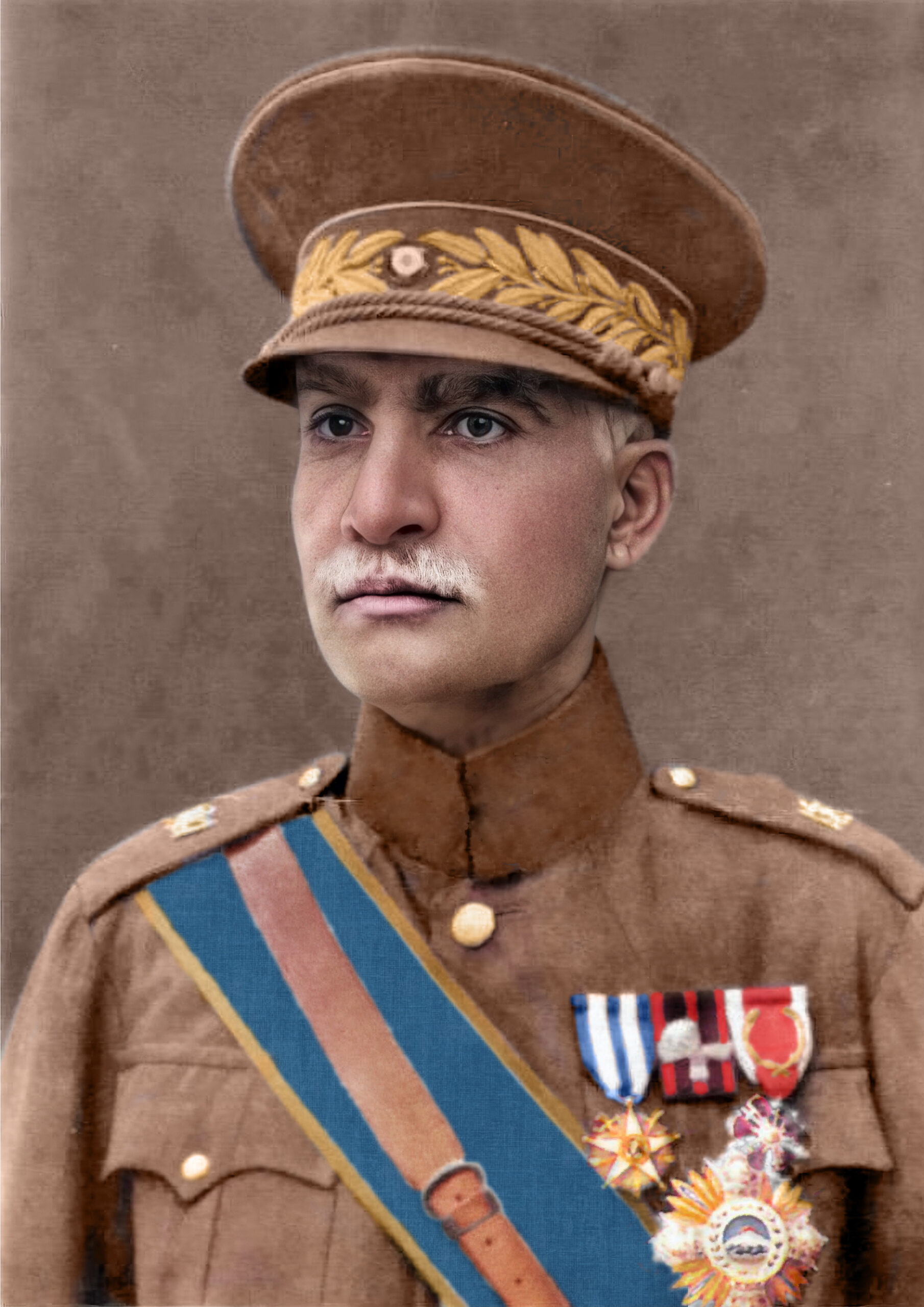
In 1935, Reza Shah proclaimed to the League of Nations that the country of Persia would henceforth be called Iran – the home of the Aryans. Photo: Unknown
In 1935, Reza Shah proclaimed to the League of Nations that the country of Persia would henceforth be called Iran – referring to the country’s ancient roots and the Sanskrit phrase Airyanem Vaejah – Home of the Aryans.
Germany recognized the Iranians’ racial purity, and according to the Nuremberg Laws, Iranians were to be considered as Aryan as any full-blooded German.
The swastika—the emblem of the Third Reich—had been a religious symbol of Zoroastrianism in Persia for millennia. The book Night of the Assassins (June 2020) describes how Reza Shah at the end of 1943 helped Hitler plan the assassinations of Roosevelt, Churchill and Stalin when they met in Tehran. The book describes how the plan was thwarted.
Indo-European culture
Hitler often talked about Aryans as tall, athletic and blonde, but the term “Aryan” from the beginning was primarily a linguistic designation for a prehistoric Indo-European culture that lived in Central Asia 3,500 years ago.
In the 19th century, “Aryan” went from describing a specific prehistoric culture to designating all Indo-Europeans. 19th century racist scientists believed that prehistoric Aryans were the ancestors of white Europeans. The Indian and European languages formed one gigantic language family – the Aryan or Indo-European language group.
Celebration time for neo-Nazis
The connection between Nazism and Iran has also been made clear in recent times. When Iran’s national football team met Angola in East German Leipzig on June 26, 2006 or played against Mexico in Nuremberg on June 11 of the same year, it was a moment of celebration for Germany’s neo-Nazis.
The reason was that Mahmoud Ahmadinejad, the then president of Iran who denied the Holocaust and wanted to wipe Israel off the map, had become an idol for Germany’s barely 40,000 organized right-wing extremists.